Car Insurance in Alaska
Alaska drivers spend an average of $1,113 a year on auto insurance according to the NAIC — ▼ −13% versus the national average of $1,282, ranking 27th most expensive of 51. The state requires 50/100/25 liability coverage and follows an at-fault system.
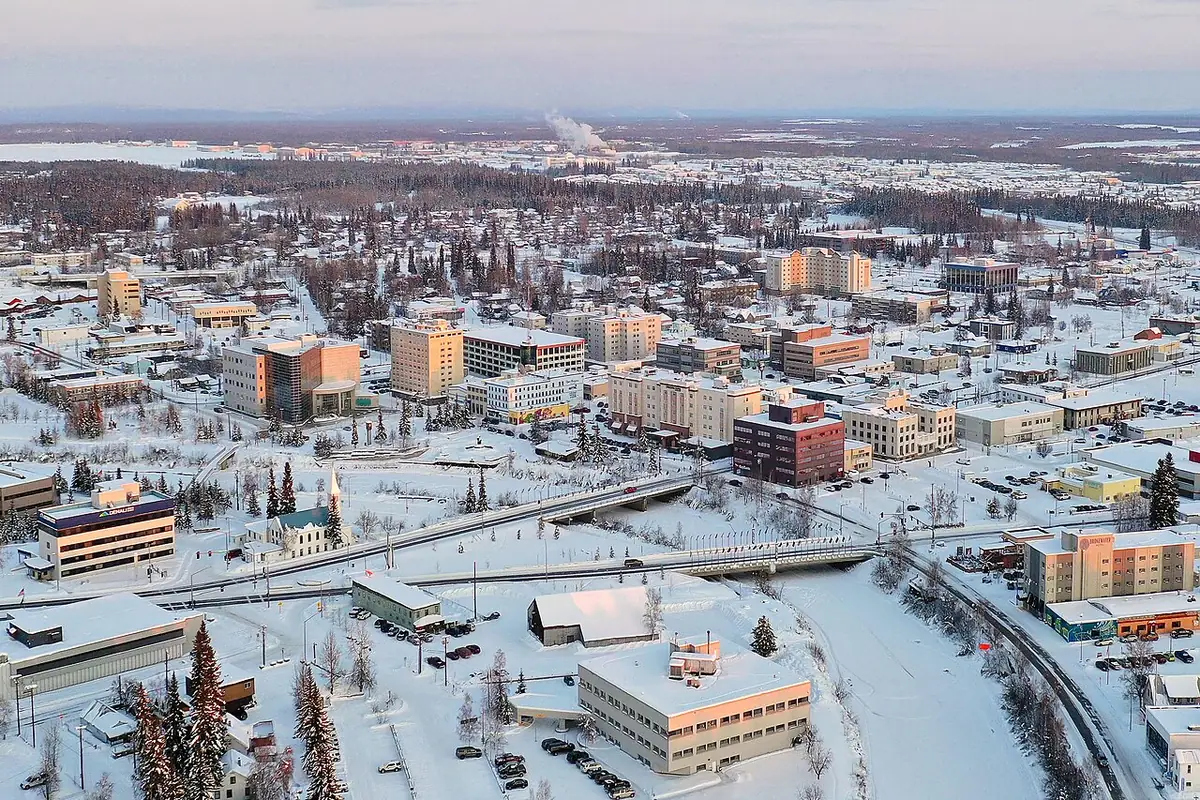
Average car insurance cost in Alaska
The NAIC average expenditure is what insured drivers actually paid on average, including people who carry only liability. For those who buy each coverage, the average premium was $624 for liability, $458 for collision and $180 for comprehensive ($1,262 combined, versus $1,439 nationally). That average expenditure is 10% higher than the NAIC's previous data year ($1,014). Comprehensive coverage is cheaper than average here, a sign of lower weather and theft losses.
Minimum car insurance requirements in Alaska
Alaska's minimum is written as 50/100/25: $50,000 per person / $100,000 per accident in bodily injury liability and $25,000 in property damage liability. Moving up to 100/300/100 limits would cost about $130 more a year by our estimate.
| Coverage | Required? | Minimum | What it pays for |
|---|---|---|---|
| Bodily injury liability | Yes | $50,000 per person / $100,000 per accident | Injuries you cause to other people |
| Property damage liability | Yes | $25,000 | Damage you cause to other vehicles and property |
| Personal injury protection (PIP) | No | — Alaska does not require personal injury protection. | Your own medical bills and lost wages, regardless of fault |
| Uninsured motorist (UM) | No | — Insurers must make a written offer of uninsured/underinsured motorist bodily injury and property damage coverage; it may be rejected by signature. | Your injuries when the at-fault driver has no insurance |
| Underinsured motorist (UIM) | No | — Offered together with uninsured motorist coverage; if the choice is not signed, limits must match the policy's liability limits. | The gap when the at-fault driver’s limits are too low |
| Medical payments (MedPay) | No | — Medical payments coverage is optional. | Medical bills for you and your passengers |
Insurance is not required in communities exempt from vehicle registration, unless the driver has a recent violation of 6 points or more.
Compare with another state
Is Alaska a no-fault state?
No — Alaska is an at-fault (tort) state. Alaska is an at-fault (tort) state: the driver responsible for a crash, through their liability insurance, pays for the other party's injuries and property damage. Injured people can claim against the at-fault driver's insurer, use their own coverage, or sue.
Uninsured drivers in Alaska
The Insurance Research Council estimates 12.5% of Alaska drivers are uninsured — 24th highest in the country, compared with 15.4% nationally. That's roughly one uninsured driver in every 8 on the road. Uninsured motorist (UM) coverage isn't mandatory here (Insurers must make a written offer of uninsured/underinsured motorist bodily injury and property damage coverage; it may be rejected by signature), but it is still inexpensive protection against hit-and-run and uninsured drivers.
SR-22 requirements in Alaska
Alaska uses the SR-22 — a certificate your insurer files with the state to prove you carry at least the minimum liability coverage. It is usually ordered after a DUI, driving uninsured, serious violations or a license suspension, and is typically kept for about 3 years. For most offenses an SR-22 must be kept for three years after a revocation ends; DUI and refusal convictions require longer filings.
By our model, a driver in their 30s with a DUI would pay about $1,180 a year for minimum coverage in Alaska, versus $625 with a clean record. What is SR-22 insurance?
Estimate your premium in Alaska
Runs in your browser — nothing you enter is stored or sent to insurers.
Car insurance by city in Alaska
We cover 8 Alaska cities. Estimates are for full coverage for a driver in their 30s with a clean record; hover a city to find it on the map. The lowest estimate is in Sitka ($1,190) and the highest in Palmer ($1,885).
- AnchoragePop. 289,600 · Anchorage Municipality$1,570+13% vs state
- FairbanksPop. 31,732 · Fairbanks North Star Borough$1,665+20% vs state
- JuneauPop. 31,572 · Juneau City and Borough$1,310−6% vs state
- WasillaPop. 10,318 · Matanuska-Susitna Borough$1,885+36% vs state
- SitkaPop. 8,355 · Sitka City and Borough$1,190−14% vs state
- KetchikanPop. 8,033 · Ketchikan Gateway Borough$1,665+20% vs state
- KenaiPop. 7,770 · Kenai Peninsula Borough$1,565+13% vs state
- PalmerPop. 6,626 · Matanuska-Susitna Borough$1,885+36% vs state
Estimated cost by driver profile in Alaska
Age and driving record move premiums more than almost anything else. A teen on their own policy pays about 2.8× what a driver in their 30s pays for the same full coverage in Alaska.
| Driver | Minimum | Standard | Full coverage | Full / month |
|---|---|---|---|---|
| Teen driver (18, own policy) | $1,715 | $2,075 | $3,830 | $319 |
| Young adult (22) | $1,000 | $1,205 | $2,230 | $186 |
| Adult in their 30s | $625 | $755 | $1,390 | $116 |
| Adult in their 50s | $575 | $695 | $1,280 | $107 |
| Senior (72) | $700 | $845 | $1,560 | $130 |
| 30s, one at-fault accident | $905 | $1,095 | $2,020 | $168 |
| 30s, DUI on record | $1,155 | $1,395 | $2,575 | $215 |
By coverage level
| Coverage level | What it includes | Per year | Per month | Typical range |
|---|---|---|---|---|
| State minimum liability | Only the liability (and PIP/UM where required) limits your state mandates. No coverage for your own car. | $625 | $52 | $510–$735 |
| Standard liability (100/300/100) | Higher liability limits plus uninsured motorist coverage. Still no coverage for damage to your own car. | $755 | $63 | $620–$890 |
| Full coverage | Standard liability plus collision and comprehensive, typically required on a financed or leased car. | $1,390 | $116 | $1,140–$1,645 |
Cheapest and most expensive cars to insure in Alaska
Full-coverage estimates for current models, using HLDI insurance-loss data where available. Vehicle choice alone can swing the premium by more than $2,970 a year here.
| Model | Segment | Est. / year |
|---|---|---|
| GMC Acadia | Midsize SUV | $905 |
| Chevrolet Traverse | Midsize SUV | $925 |
| Subaru Forester | Small SUV | $1,010 |
| Subaru Crosstrek | Small SUV | $1,020 |
| Honda Pilot | Midsize SUV | $1,030 |
| Subaru Outback | Wagon | $1,035 |
| Honda CR-V | Small SUV | $1,045 |
| MINI Cooper | Subcompact car | $1,055 |
| Acura RDX | Luxury SUV | $1,100 |
| Ford Bronco | Midsize SUV | $1,110 |
| Model | Segment | Est. / year |
|---|---|---|
| BMW M4 | Luxury sports car | $3,875 |
| BMW M3 | Luxury car | $3,830 |
| Lamborghini Urus | Luxury SUV | $3,585 |
| BMW 7 Series | Luxury car | $3,310 |
| Mercedes-Benz S-Class | Luxury car | $2,665 |
| Lucid Air | Luxury car | $2,580 |
| Audi RS 7 | Luxury car | $2,230 |
| Mercedes-Benz G-Class | Luxury SUV | $2,200 |
| Porsche Taycan | Luxury sports car | $2,110 |
| Alfa Romeo Giulia | Luxury car | $2,055 |
Cheap car insurance in Alaska: how to lower your rate
- Raise your deductible. Going from $500 to $1,000 on collision and comprehensive saves about $85 a year on a typical Alaska full-coverage policy.
- Match coverage to your car's value. On a 10-year-old car, dropping collision and comprehensive could cut the bill from about $1,105 to $755.
- Drive less, pay less. Low-mileage and usage-based programs can save around $95 a year if you drive under 7,500 miles.
- Protect your record. A single speeding ticket adds roughly $310 a year in our model; an at-fault accident adds much more.
- Shop at renewal. Rates for the same driver differ widely between insurers. Compare identical limits and deductibles.
- Ask about discounts — bundling home and auto, good student, safe-driver, paid-in-full and defensive-driving course discounts. See common discounts.
Complaints and help: Alaska Division of Insurance
The Alaska Division of Insurance licenses insurers and agents, reviews rates and handles consumer complaints about claims, cancellations and billing — free of charge.
- Website
- insurance.alaska.gov
- File a complaint
- Consumer complaint page
- Consumer helpline
- 1-800-467-8725
Frequently asked questions
How much is car insurance in Alaska?
NAIC data puts the average Alaska auto insurance expenditure at $1,113 a year, 13% less than the national average of $1,282 (rank 27 of 51, where 1 is the most expensive). Our estimate for full coverage for a driver in their 30s with a clean record is about $1,390 a year ($116 a month); state-minimum liability is about $625.
What is the minimum car insurance required in Alaska?
Alaska requires at least 50/100/25 liability coverage: $50,000 per person / $100,000 per accident for bodily injury and $25,000 for property damage.
Is Alaska a no-fault state?
No. Alaska is an at-fault (tort) state: the driver responsible for a crash, through their liability insurance, pays for the other party's injuries and property damage.
How many drivers in Alaska are uninsured?
The Insurance Research Council estimates that about 12.5% of Alaska drivers are uninsured, ranking 24th in the nation (national estimate: 15.4%).
Does Alaska require SR-22 insurance?
Yes, Alaska uses the SR-22 certificate for drivers who must prove financial responsibility, typically for about 3 years. For most offenses an SR-22 must be kept for three years after a revocation ends; DUI and refusal convictions require longer filings.
Which Alaska city has the cheapest car insurance?
Among the 8 cities we cover, Sitka has the lowest full-coverage estimate at about $1,190 a year, while Palmer is the highest at about $1,885. Differences come from population density, commute length and local weather risk.
How much does car insurance cost for a teen driver in Alaska?
An 18-year-old on their own full-coverage policy would pay roughly $3,830 a year in Alaska by our estimate, or about $1,715 for minimum coverage. Joining a parent's policy usually costs less.
How do I file a complaint against a car insurance company in Alaska?
Contact the Alaska Division of Insurance (consumer line 1-800-467-8725). It handles consumer complaints about claims, cancellations and rates at no cost.
How we estimate this
We start from the state's average liability, collision and comprehensive premiums published by the NAIC, then apply a location factor (population density and commute time from the Census ACS, weather hazard scores from FEMA's National Risk Index), a vehicle factor (HLDI insurance-loss data where available, otherwise vehicle segment), and a driver-profile multiplier. Results are rounded ranges for comparison, not quotes. Read the full methodology.
- Alaska DMV: Mandatory Insurance
- Alaska DMV: SR-22 Insurance
- Alaska Division of Insurance: Consumer Guide to Automobile Insurance
- Alaska Division of Insurance: File a Consumer Complaint
- NAIC 2022/2023 Auto Insurance Database Report
- NAIC Homeowners Insurance Report: Data for 2023
- Insurance Research Council uninsured motorist estimates (via Triple-I)
- IIHS Fatality Facts: state by state
- FBI Crime Data Explorer: Crime in the United States 2025 (Table 4)
- NICB 2022 Vehicle Theft Data: top 10 stolen vehicles by state
- FHWA Highway Statistics 2024, Table DL-1C (licensed drivers)
- FHWA Highway Statistics 2024, Table MV-1 (registrations)
- FHWA Highway Statistics 2024, Table VM-2 (vehicle-miles traveled)
- U.S. Census Bureau Vintage 2024 population estimates
- U.S. Census Bureau: population estimates and American Community Survey
- FEMA National Risk Index